

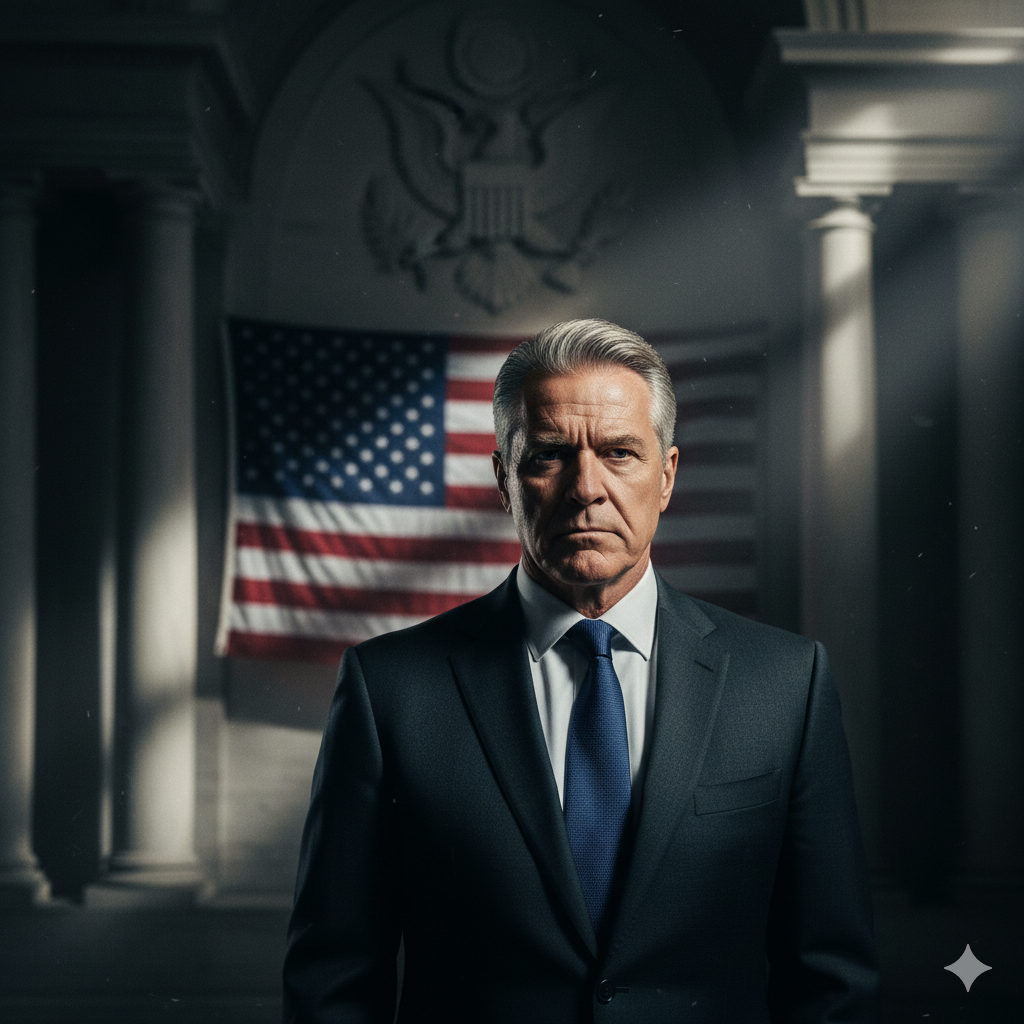
Understanding how Dick Cheney fooled USA
The story of how Dick Cheney fooled USA isn’t a simple tale of one bad decision or a single misleading speech. It’s the story of systematic manipulation, strategic fear-building, and calculated use of power that reshaped American foreign policy for decades.
Dick Cheney—once a quiet bureaucrat from Wyoming—eventually became the most influential Vice President in U.S. history, orchestrating decisions that led to:
- A war based on false intelligence
- The expansion of executive power
- Massive corporate profit for his former company
- A breakdown of trust between the U.S. government and its people
To understand how America was convinced to fight a costly, unnecessary war, we must examine the multi-layered strategy Cheney executed before and after 9/11.
Senator Bernie Sanders
“Cheney pushed the United States into the worst foreign policy blunder in modern history.”
(2015 interview)
Cheney’s Rise From Wyoming to Washington Power Circles
Before analyzing how Dick Cheney fooled USA, it’s important to understand how he became powerful enough to do so.
Dick Cheney rose through Washington at remarkable speed, earning a reputation as a skilled political operator. His early government career allowed him to build the relationships and influence needed to later reshape U.S. foreign policy.
Strategic Positioning in the Nixon & Ford Administrations
Dick Cheney held several positions where he controlled information flow — a theme that would later define his vice presidency.
As White House Chief of Staff under President Gerald Ford, he learned the importance of limiting access and shaping narratives.
Congressman Dennis Kucinich
Introduced articles of impeachment accusing Dick Cheney of “manipulating intelligence to manufacture a threat from Iraq.”
(2007)
Congressional Career & Return to Executive Power
Later, as a six-term Congressman from Wyoming, Cheney became known for:
- 1. Tough National Security Stances
Dick Cheney pushed for an aggressive national security strategy built on military dominance, expanded surveillance, and preemptive force.
He argued that civil liberties could be limited for safety, supporting warrantless monitoring and harsh interrogations. He insisted the U.S. respond to terrorism with overwhelming strength, rejecting diplomacy or multilateral approaches.
Dick Cheney favored a global counterterrorism system with minimal oversight, believing decisive action mattered more than deliberation. He dismissed reliance on international institutions, promoting unilateral U.S. action to neutralize threats.
2. Support for Unchecked Presidential Authority
Dick Cheney strongly supported the “unitary executive” idea, giving the President broad war-time powers.
He worked to expand executive authority, often bypassing Congress and reducing judicial involvement.
Dick Cheney defended presidential control over surveillance, detentions, and covert actions without outside approval.
He argued secrecy was vital, allowing the President to act swiftly and independently.
Cheney rejected shared war powers, claiming the Commander-in-Chief should initiate force whenever necessary.
3. Deep Hawkish Tendencies on the Middle East — Short Version
Cheney believed the Middle East required strong U.S. intervention to maintain global stability.
He viewed Iraq, Iran, and Syria as major threats and favored military pressure over diplomacy.
Cheney supported regime change and long-term U.S. involvement to reshape the region’s political landscape. He argued that removing hostile governments would strengthen American influence and prevent future attacks.
His foreign policy aligned with hardline positions: preemptive strikes, strong sanctions, and unwavering support for regional allies.
These beliefs paved the way for the more aggressive worldview he advanced after 9/11.
Halliburton: The Corporate Power Base Behind Cheney
After serving as Secretary of Defense, Cheney left government to become CEO of Halliburton, one of the largest oil services and engineering companies in the world.
This move created a web of conflicts of interest, because the policies he later supported directly benefited the company he once led.
His Return to Politics With Deep Corporate Ties
When Cheney returned as George W. Bush’s running mate in 2000, he brought with him:
- Global oil industry connections: Strong ties to major energy corporations and international oil markets through Halliburton.
- A corporate worldview: Prioritized business interests, privatization, and profit-driven policy decisions.
- Motivation to expand U.S. presence in oil-rich regions: Supported strategic influence in the Middle East to secure energy resources and geopolitical advantage.
Soon, those motivations aligned with intelligence narratives that Cheney himself aggressively shaped.
Post-9/11: The Moment Cheney Seized Unprecedented Power
After the September 11 attacks, Cheney became the central figure shaping America’s response.
Unlike previous Vice Presidents who remained symbolic, Cheney:
- Controlled classified briefings: Managed and shaped the sensitive information presented to top officials.
- Received raw intelligence streams: Accessed unfiltered intelligence reports before they were fully analyzed.
- Influenced security agencies directly: Applied pressure on intelligence and defense agencies to align with his agenda.
- Narrowed the President’s information pipeline: Limited what the President saw, directing decisions through his preferred interpretations.
This concentration of power played a critical role in how Dick Cheney fooled USA into believing war was the only solution.
Why Cheney Became the Most Influential VP in History
Cheney mastered three tools:
- Control of information: Managed what intelligence and briefings reached top decision-makers.
- Fear-based messaging: Used alarming narratives to drive public and political support.
- Direct influence on intelligence analysis: Pressured analysts to shape findings that matched his preferred outcomes.
These tools allowed him to build an unchallenged narrative that Saddam Hussein was an urgent, lethal threat.
The First Major Deception: Creating the “Imminent Threat” Myth
Fabricated Nuclear Narrative
Cheney famously declared:
“There is no doubt Saddam Hussein has weapons of mass destruction.”
But the intelligence community did have doubts.
Cheney rejected them.
The infamous claims included:
- Aluminum tubes supposedly for nuclear centrifuges
- Uranium yellowcake allegedly purchased from Niger
Both claims were discredited long before the war began — but Cheney repeated them as certainties.
Chemical & Biological Stockpile Myths
Cheney asserted Saddam had:
- Mobile bioweapons labs: Claimed Iraq operated secret, movable biological weapons facilities.
- Weaponized anthrax: Suggested Saddam possessed anthrax ready for military use.
- Chemical stockpiles ready for deployment: Asserted Iraq held chemical weapons prepared for rapid deployment.
No such stockpiles were ever found.
Yet these claims successfully built public fear, pushing the nation toward war.
Linking Saddam to 9/11: The Most Damaging Fabrication
Cheney repeatedly hinted that Saddam Hussein was involved in 9/11 — despite zero credible evidence.
Media Manipulation Through Repetition
He appeared on television dozens of times, especially on NBC’s Meet the Press, repeating discredited claims until millions of Americans believed them.
This tactic was central to how Dick Cheney fooled USA into supporting a conflict that had nothing to do with 9/11.
How Dick Cheney fooled USA by Manipulating Intelligence Agencies
Cheney did something unprecedented for a Vice President:
He personally visited CIA headquarters to pressure analysts.
Office of Special Plans (OSP)
When the CIA didn’t give him the answers he wanted, Cheney supported a separate intelligence unit — the OSP — that cherry-picked data supporting the case for war.
Pressuring Analysts for “Certainty”
Cheney and Scooter Libby frequently challenged analysts who expressed doubts.
Many later testified they felt pressured to “get in line” with Cheney’s expectations.
. Senator Robert Byrd
“This administration misled the American people… Cheney was among the worst offenders.”
(Senate Speech, 2004)
Bypassing Congress: The Deception Behind the 2002 Iraq Resolution
To secure authorization for war, Cheney delivered:
- Selective intelligence: Picked only the intelligence pieces that supported a predetermined narrative.
- Fear-loaded briefings: Delivered threat-focused presentations designed to heighten urgency and alarm.
- Simplified summaries of complex reports: Reduced nuanced intelligence into oversimplified claims that exaggerated danger.
Many lawmakers later admitted they were misled.
This manipulation was a key step in how Dick Cheney fooled USA into granting legal cover for the invasion.
Senator John McCain
“Vice President Cheney and Secretary Rumsfeld were the chief architects of a failed strategy.”
(2007, criticizing Iraq War management
Undermining UN Inspections & Global Diplomacy
Hans Blix and the UN
UN weapons inspectors asked for more time — they were close to proving Iraq had no active WMD program.
Cheney dismissed them harshly, claiming they were being “fooled by Saddam.”
Why Cheney Rejected a Second UN Resolution
A second resolution might have stopped the war.
Cheney couldn’t risk that.
So he pushed for unilateral action and built a “coalition of the willing,” bypassing global checks on U.S. power.
Faulty War Planning: The “Light Footprint” Disaster
Cheney supported Rumsfeld’s strategy of invading Iraq with a smaller force, ignoring warnings from generals.
The result:
- Insufficient troops to maintain order: Deployed too few forces to stabilize Iraq after the invasion.
- Widespread looting: Allowed uncontrolled looting that destroyed infrastructure and government assets.
- Power vacuums: Dissolved Iraqi institutions, leaving no functioning authority in their place.
- Rise of insurgency: Created conditions that enabled armed resistance and extremist groups to grow.
Senator Ted Kennedy
“The vice president drove this country into a war based on deception.”
(2006)
Halliburton Profits & War-Time Contract Controversies
Halliburton and its subsidiary KBR received multi-billion-dollar no-bid contracts.
Investigations exposed:
- Overbilling: Charged excessive fees for contracted services in Iraq.
- Poor oversight: Operated with minimal government monitoring or accountability.
- Questionable logistics costs: Submitted inflated expenses for transportation, supplies, and support operations.
This cemented public belief that war decisions benefited Cheney’s former corporation.
Public Backlash: How Americans Discovered They Were Misled
As casualties rose and no WMDs appeared, Americans realized the narrative was false. The 2008 Senate Intelligence Committee concluded that Cheney’s statements were:
“Not substantiated by intelligence.”
Public trust collapsed.
Long-Term Legacy: Executive Overreach & Public Distrust
Cheney’s actions reshaped the presidency by:
- Expanding executive secrecy: Concentrated decision-making behind closed doors and restricted access to key records.
- Weakening congressional oversight: Reduced lawmakers’ ability to question, review, or challenge major national-security actions.
- Increasing public skepticism about future war: Eroded trust in government narratives, making Americans more doubtful of future military claims.
The effects continue to shape U.S. politics today.
Secretary of State Colin Powell (via his Chief of Staff, Lawrence Wilkerson)
“Cheney and Rumsfeld formed a cabal that hijacked U.S. foreign policy.”
(2005 speech by Wilkerson)
❓ FAQs About How Cheney Misled Americans
1. Did Dick Cheney knowingly push false intelligence?
Evidence shows he repeatedly ignored or contradicted intelligence agencies when their reports didn’t fit his agenda.
2. Was Cheney responsible for linking Saddam to 9/11?
Yes. He promoted the discredited Mohammed Atta–Prague meeting claim long after agencies dismissed it.
3. Did Cheney influence CIA analysts?
Multiple intelligence officials testified that they felt pressured by Cheney and his staff.
4. Why did Halliburton receive so many Iraq War contracts?
Cheney’s former role and influence created strong concerns about conflict of interest.
5. Did the UN believe Iraq had WMDs?
No. Hans Blix specifically asked for more time, stating there was no evidence of active programs.
6. Is Cheney’s legacy still controversial today?
Extremely. His role in shaping U.S. foreign policy is widely criticized by historians and former officials.
Understanding how Dick Cheney fooled USA and Why It Still Matters
The evidence is overwhelming: how Dick Cheney fooled USA was a systematic, deliberate process built on fear, misinformation, and political pressure. His strategies led to one of the most controversial wars in modern history and profoundly damaged America’s global credibility.
Understanding this history is essential — not to assign blame blindly, but to ensure future leaders cannot repeat the same manipulative tactics.
For further reading, see the Iraq Inquiry (Chilcot Report) — one of the most detailed investigations into the war’s origins.
(External source: https://www.iraqinquiry.org.uk)
Reliable Sources About Cheney, the Iraq War, Intelligence Manipulation & Halliburton
These are public, reputable, mainstream sources that directly address Cheney’s role, controversies, or documented actions:
1. U.S. Senate Intelligence Committee Report (2004 & 2008)
- Report on the U.S. Intelligence Community’s Prewar Intelligence Assessments on Iraq
- Concluded that senior officials (including Cheney) made statements not supported by intelligence.
Source: U.S. Senate (Select Committee on Intelligence)
2. The Chilcot Report – Iraq Inquiry (2016)
- UK Government’s official investigation into the Iraq War.
- Found that prewar intelligence was exaggerated and that political leaders created a “false sense of urgency.”
Source: Iraq Inquiry (UK Government)
3. CIA Inspector General Report (2007)
- Detailed how pressure from senior officials influenced the handling of intelligence related to Iraq and terrorism.
Source: CIA OIG
4. “The Dark Side” – PBS Frontline Documentary
- Investigates Cheney’s role in the War on Terror, including CIA pressure and intelligence shaping.
Source: PBS Frontline
5. “Hubris: The Inside Story of Spin, Scandal, and the Selling of the Iraq War” (Book by Michael Isikoff & David Corn)
- Documents how the case for war was built, including Cheney’s role.
6. “Plan of Attack” – Bob Woodward (Washington Post Journalist)
- Reconstructs the Bush Administration’s decision-making, showing Cheney’s influence.
7. “The Price of Loyalty” – Ron Suskind
- Based on interviews with Treasury Secretary Paul O’Neill, revealing early discussions of Iraq and Cheney’s dominance.
8. Government Accountability Office (GAO) Reports on Halliburton/KBR Contracts
- Documented overbilling, no-bid contracts, and logistical problems in Iraq.
9. Brown University – Costs of War Project
- Offers research-backed figures for U.S. casualties, financial cost, and Iraqi civilian deaths.
10. International Atomic Energy Agency (IAEA) Reports
- Disproved Cheney’s claims about Iraq having an active nuclear program (e.g., aluminum tubes).